RUAHINE WHIO PROTECTORS
  • Home
  • WHIO
    • WHIO FACTS
    • Whio Food
    • WHIO VIDEOS
    • Whio History
  • RWP NEWS
  • GALLERY
  • RUAHINE PROTECTION
  • Contact

Northern Ruahine Post Cyclone Gabrielle Whio Survey
                                 May 2023

A whio survey was undertaken in the Northern Ruahine Forest Park, in fine weather between the 24th and 26th of May 2023. Pete Bird (DOC) and a certified whio dog surveyed the Mangatera catchment. Lisa and Geoff Whittle, Max Smart (DOC) and Falco, a certified whio dog surveyed the Ikawetea catchment. The original survey had been delayed twice due to Cyclone Gabrielle and other bad weather.
The area surveyed was included in a 32,000 ha area treated with aerially applied 1080 baits in both 2017 and 2019 under both the Battle For Our Birds and Tiakina Nga Manu banners and is also included in a volunteer trapping programme targeting mustelids using DOC 200 series single action kill traps and goodnature A24 self-setting traps. The area will also be included in a National Predator Control Programme operation which is due to go ahead in spring 2023
Mangatera catchment
Remutupo Stream
The Remutupo Stream was surveyed from near the headwaters downstream to its confluence with the Mangatera River, a total of 7.1 kilometres. Two pairs and two single adults of unknown sex were found in the first four kilometres of the survey. The stream was running clear but up to two metres of gravel had been deposited in some places. There were invertebrates present under some rocks, but it was clear by looking at faecal sign found, that Coprosma propinqua berries were making up a large portion of the bird’s diets. These trees were abundant on the banks of the stream and were in full fruit. In this stretch of river during the previous survey in 2022, four pairs, two single adult birds and a number of juvenile birds from the 2022 breeding season were found.
750 metres of an un-named confluence near the top of the catchment was also surveyed and a single pair were found in the river near the survey end point. Heavily fruiting Coprosma propinqua was abundant on the river banks and was the most common find in whio faeces found on this side creek. During the previous survey in 2022, a pair was also found in the same area.
In the last 3.1 kilometres of river, no birds were found and only two sets of prints were observed near the confluence with the Mangatera. In this stretch of the river, no invertebrates were found, the water was discoloured and shingle was still moving in the river which had become braided and very shallow. On both nights of the survey, a male whio was heard from Colenso Hut and in the darkness on the second morning, a female was also heard from the hut.
 During the previous survey in 2022, one pair and two single adult birds were found on the same stretch of river as well as a number of juvenile birds from the 2022 breeding season. Sign was also distributed all the way down to the confluence with the Mangatera.
Image
Picture
Picture
Picture
Mangatera River
The Mangatera River survey started 2.3 kilometres upstream of the Remutupo Stream/Mangatera River confluence, continued downstream for 5.2 kilometres and finished 250 metres downstream of the Mangatera River/Waiokotore Stream confluence. No birds were found in this survey area. During the 2022 survey, two pairs, one single adult and a number of juveniles from the 2022 breeding season were found.
Between the survey start point and the Remutupo/Mangatera confluence, no sign or birds were observed. The river was discoloured, gravel was still moving in the river and there were large gravel deposits on the river banks. Invertebrate numbers observed were also low.
In the lower 3 kilometres of the survey area, between the Mangatera/ Remutupo confluence and the Mangatera/Waiokotore confluence, no birds, three sets of prints and three faeces were found. No invertebrates were found in this stretch of the river. All faeces on this river were found closer to the Waiokotore Stream. Usually there are large deep pools in this section of the river which have to be avoided by walking above them through the bush. Most of these pools are now full of gravel and can now be easily walked through. There was still gravel observed moving in the river, which was discoloured.
750 metres of a tributary, the Potae stream was also surveyed. No birds or sign were observed in the stream. Less cyclone damage was observed in the stream than the main river, it was running clear and invertebrates were present under rocks.
Picture
Picture
Waiokotore Stream
The Waiokotore survey started from its confluence with the Mangatera River and finished just past the old Waikotore Bivvy site, a total of 3.3 kilometres. Whio sign was abundant as soon as we started walking upstream from the confluence with the Mangatera. The first pair was quickly found. It was obvious from river debris and water levels that a lot of water had been down the Waiokotore during the cyclone. The riverbed was intact, and the water was clear. During time spent looking under rocks for invertebrates, it was noticed that the invertebrates present under rocks were larger and more numerous when compared with the Mangatera or Remutupo. It is possible that some birds were missed in an area that was inaccessible due to the terrain, as in the 2022 survey. 1.7 kilometres upstream from the survey start point, a male duck was found in a roost and another 200m upstream from this bird a female was found on the river, it is likely that these birds were a pair. Once the survey end point was reached, Tui started winding upstream. Glen and Tui went to investigate, and a pair was found hiding in the riverbank roost near the survey end point. During the 2022 survey, two pairs, three single adult birds and a number of juveniles from the 2022 breeding season were found.
Picture
Picture
Picture
Picture
Picture
Picture
Picture
Ikawetea catchment
Apias Stream
The team were dropped off at Mistake Bivvy, surveyed upstream for 1.4 kilometres then proceeded to survey downstream for 3.4 kilometres from Mistake Bivvy to Rockslide Hut. The Apias was unrecognisable from what it had been pre Cyclone Gabrielle. The pre flood stream had very little gravel but is now discoloured and full of mobile shingle. Most of the deep pools are now also full of gravel. The majority of the vegetated river terraces have disappeared and have been replaced by gravel. One pair of whio was found upstream of Mistake Bivvy and three pairs and three single adult birds were found on the stretch of river between Mistake Bivvy and Rockslide Hut.
On the second day, the stretch of river between Rockslide Hut and the track to Ikawetea Forks Hut was surveyed, this totalled 4.2kilometres. One pair and three single adult birds were found, and a single pair was also found in the Apias in a 600 meter stretch of between Ikawetea Forks hut and the waterfall.
2.1 kilometres of Blind Creek, a tributary of the Apias was also surveyed. No sign or birds were found in the stream, but some sign was found near the stream mouth. Unlike the Apias, Blind Creek was running clear.
Picture
Ikawetea Stream
8 kilometeres of the Ikawetea Stream was surveyed between 25 and 26 of May. The stream was running clear and flood damage was less visible when compared to the Apias. A total of two pairs, one adult female and one adult sex unknown were found. 1.7 kilometres of river was surveyed downstream of the hut where the first pair was found 1.2 kilometres downstream. Kiwi prints were also found in mud on the stream bank.
Picture
Picture
Picture
Picture
Picture
Picture

 Some West Coast Whio History
Picture
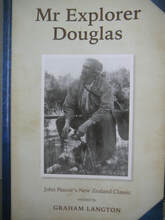
From 1867 to 1916 Charlie 'Mr Explorer' Douglas lived on the West Coast of the South Island.  He spent most of his time exploring, mapping and surveying the bush and mountainous inland regions.  Douglas was a keen observer of the geology and ecology of those areas.   John Pascoe rediscovered and preserved many of Douglas' writings and sketches.  Pascoe's 1957 book is long out of print so these extracts are from Graham Langton's 2016 revised edition, printed by  Canterbury University Press.  Permission was kindly given to use these extracts.

The following is from a trip up the Waiatoto in 1891 where he talks about the arrival of ferrets "a breed too refined for Vulgar game but must have Ducks alone?"
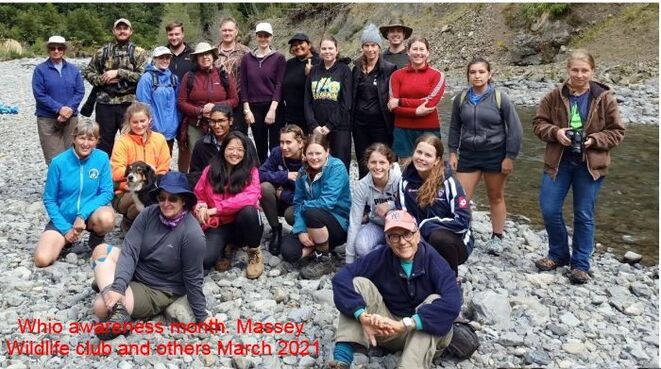
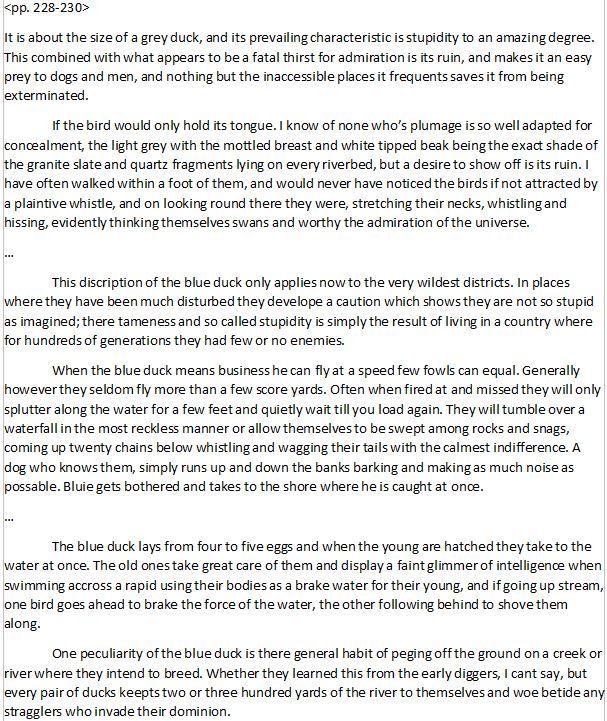
The following are some of his observations on the Whio.
Picture
  • Home
  • WHIO
    • WHIO FACTS
    • Whio Food
    • WHIO VIDEOS
    • Whio History
  • RWP NEWS
  • GALLERY
  • RUAHINE PROTECTION
  • Contact